What Are Past Papers and How Do You Use Them for Revision?
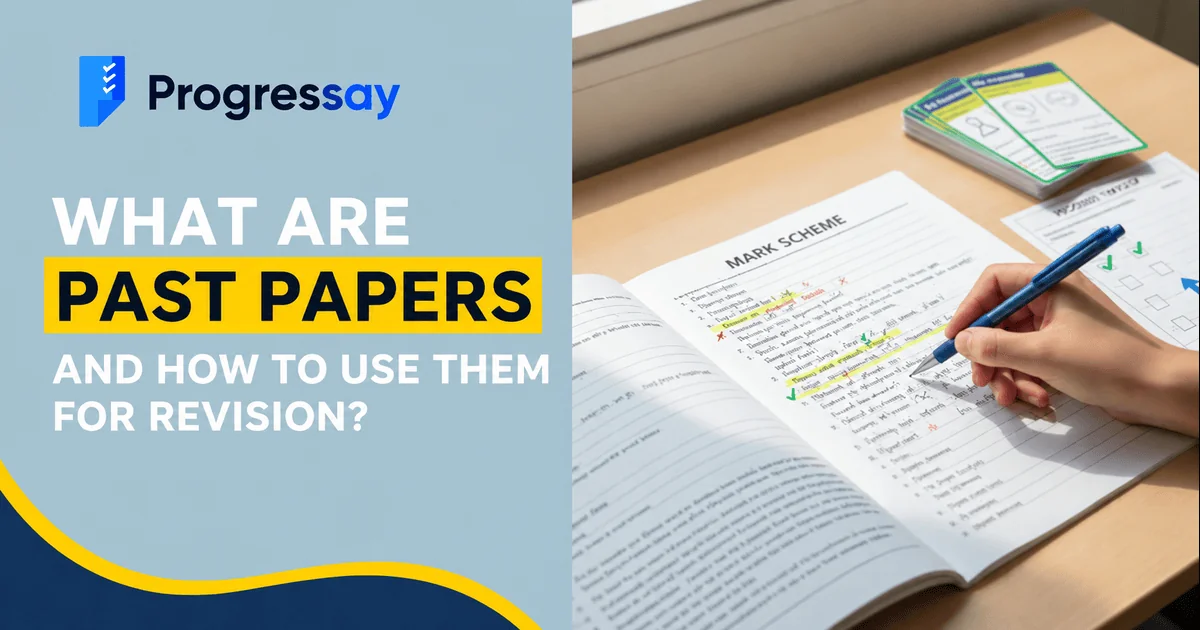
Past papers are previous exam papers that students can use to practise questions, understand exam formats and prepare for upcoming exams. They are one of the most effective ways to improve exam technique, identify knowledge gaps and build confidence before an exam.
If you are preparing for GCSEs or other exams, practising with past papers can help you understand what to expect and how to answer questions effectively.
With Progressay Past Papers, you can access free past papers to support your revision and practise at your own pace.
What Are Past Papers?
Past papers are exam question papers from previous examination sessions. They contain questions that students have previously been asked in real exams.
Students use past papers to:
-
Understand the structure and format of exams.
-
Practise answering different types of questions.
-
Improve time management.
-
Identify topics that need more revision.
-
Check their answers using mark schemes.
-
Build confidence before exam day.
For students preparing for GCSE exams, past papers are particularly useful because they provide an opportunity to practise exam-style questions.
You can explore the Progressay Past Papers collection to find resources for your revision.
Why Are Past Papers Important for Revision?
Reading textbooks and making notes are useful, but they do not always show whether you can apply what you have learned in an exam.
Past papers help you put your knowledge into practice.
Here are some important benefits.
1. Understand the Exam Format
Every subject has its own exam structure, question types and marking requirements. Practising previous exam questions helps you become familiar with how questions are presented.
2. Identify Your Weak Areas
When you complete a past paper, you can see which questions you find difficult. This helps you identify topics that need more attention.
Instead of revising everything equally, you can focus on the areas where you need the most improvement.
3. Improve Time Management
Exams have time limits. Practising under timed conditions helps you learn how long to spend on each question and how to complete the paper within the available time.
4. Learn How Marks Are Awarded
Mark schemes explain what examiners look for when awarding marks. Reviewing them helps you understand how to improve your answers and avoid missing important points.
5. Build Exam Confidence
The more familiar you become with exam-style questions, the more comfortable you may feel when facing similar formats in your actual exam.
For more revision advice, read our guide: Why Past Papers Are One of the Best Study Tools for Exam Success.
How to Use Past Papers Effectively for Revision
Simply completing past papers is not enough. You need to review your answers and learn from your mistakes.
Follow these six steps to get more value from your revision.
Step 1: Choose the Right Past Paper
Start by selecting a past paper that matches your subject, exam level and examination board.
For GCSE revision, choose papers that are relevant to the topics and specification you are studying.
You can start exploring subjects and available resources in the Progressay All Past Papers directory.
Step 2: Attempt Questions Without Looking at the Answers
Try to answer the questions independently before checking the mark scheme.
This helps you understand what you can remember and apply without additional support.
If you are just starting, you can practise individual questions before attempting a complete paper.
Step 3: Practise Under Exam Conditions
Once you feel comfortable with the subject, attempt a complete paper under timed conditions.
Try to:
-
Work in a quiet environment.
-
Avoid checking your notes.
-
Follow the recommended exam time.
-
Answer every question you can.
-
Leave time to review your answers.
This helps you develop realistic exam habits.
Step 4: Check Your Answers Using Mark Schemes
After completing the paper, compare your answers with the relevant mark scheme where available.
Look carefully at:
-
Marks you missed.
-
Important points you did not include.
-
Questions you misunderstood.
-
Answers that were too short or unclear.
Remember that mark schemes are guides to marking. Some questions may allow different valid answers, so consider your teacher's feedback as well.
Step 5: Learn From Your Mistakes
Do not simply check your score and move on to another paper.
Write down the topics and question types you found difficult. Revisit the relevant lessons, notes or textbooks, and practise similar questions again.
For more practical advice, read How to Improve Your Exam Marks Using Past Papers.
Step 6: Repeat and Track Your Progress
Complete more practice questions as you improve.
Keep a record of your scores and mistakes so you can see which areas are getting better and which still need attention.
Your goal should not just be to complete more papers. It should be to understand your mistakes and improve the quality of your answers.
Where Can You Find Free Past Papers Online?
Finding suitable revision resources can make exam preparation easier.
Progressay provides a free Past Papers resource where students can explore available exam papers and use them to practise their subjects.
Visit Progressay Past Papers to get started.
You can also browse the All Past Papers directory to explore the available resources.
Whether you are preparing for GCSEs or revising another subject, choose papers that match your course and exam requirements. Always check that the paper is relevant to the specification you are studying.
How Can AI Help You With Past Paper Revision?
AI tools can support your revision by helping you understand questions, review written answers and identify areas for improvement.
Progressay also offers a free AI Grading Assistant that students can use to get feedback on written work.
You can use AI as an additional learning aid in the following ways:
-
Ask for an explanation of a difficult question.
-
Get feedback on a practice essay.
-
Identify areas where your answer could be clearer.
-
Ask for help understanding a topic.
-
Generate additional practice questions.
For example, you could ask an AI tool:
"Review my practice answer and explain how I could improve it. Identify missing points and suggest ways to make my response clearer."
AI feedback should be treated as guidance, not an official exam mark. Always check your work against the relevant mark scheme and your teacher's advice.
Common Mistakes to Avoid When Using Past Papers
Avoid these common mistakes to make your revision more effective:
-
Looking at answers too early: Attempt the questions first so you can test your knowledge honestly.
-
Ignoring your mistakes: Review incorrect answers and understand why you lost marks.
-
Practising without a time limit: Include timed practice as your exam approaches.
-
Using papers from the wrong specification: Check that the paper matches your subject and course.
-
Only focusing on your score: Understanding how to improve is more important than the number of marks alone.
-
Completing papers without revising weak topics: Use your results to plan your next revision sessions.
Frequently Asked Questions About Past Papers
What are past papers used for?
Past papers are used to practise previous exam questions, understand exam formats, improve time management and identify areas that need more revision.
Are past papers good for GCSE revision?
Yes. Past papers are useful for GCSE revision because they help students practise exam-style questions, understand marking requirements and become more familiar with exam formats.
Where can I find free GCSE past papers?
You can find free revision resources on Progressay Past Papers. Visit the All Past Papers directory to explore available papers.
How many past papers should I complete before an exam?
There is no fixed number. Focus on completing relevant papers, reviewing your mistakes and improving your weak areas. A few carefully reviewed papers can be more useful than completing many without checking your answers.
Should I use mark schemes when practising past papers?
Yes. Mark schemes help you understand how marks are awarded and what a good answer should include. Use them after attempting the questions.
Can past papers predict exam questions?
No. Past papers can help you understand question styles and practise important skills, but they cannot guarantee which questions or topics will appear in a future exam.
When should I start practising past papers?
You can start practising individual questions once you have covered some of the relevant topics. Begin full timed papers when you have enough subject knowledge to attempt them.
Can AI help me improve my past paper answers?
Yes. AI can provide additional feedback, explain difficult questions and suggest improvements. However, AI feedback is not an official examiner's assessment and should be checked against relevant mark schemes.
Start Your Exam Revision With Progressay Past Papers
Preparing for exams does not have to be complicated. Practising past papers regularly, checking your answers and learning from mistakes can help you become a more confident and effective learner.
Progressay makes it easier to get started with free past paper resources. Explore available papers, practise exam-style questions and use your results to guide your revision.
Visit Progressay Past Papers today and take the next step towards smarter exam preparation.
You can also try our free AI Grading Assistant for additional feedback on your written answers.