Past Papers: The Secret to Smarter Exam Preparation
Preparing for exams can feel overwhelming, especially when you aren't sure what to expect. Reading textbooks and taking notes are important, but many students overlook one of the most effective revision tools available—past papers.
Past papers allow you to experience the style, format, and difficulty of real exams before exam day arrives. Instead of simply memorizing information, you learn how to apply your knowledge under exam conditions.
Whether you're preparing for school exams, college assessments, or professional qualifications, practicing with past papers can make your revision more focused and productive.
If you're looking for a collection of exam resources, the Past Papers section on Progressay provides organized materials that can help students practice more effectively.
Why Past Papers Are So Effective
Many successful students include past papers as a regular part of their revision because they offer practical experience that textbooks alone cannot provide.
1. Understand the Exam Format
Every exam has its own style. Some include multiple-choice questions, while others require long written answers, calculations, or essays.
Working through previous papers removes uncertainty and helps you understand exactly what you'll face.
2. Improve Time Management
Knowing the material isn't always enough. You also need to complete the exam within the available time.
By practicing under timed conditions, you'll learn how long to spend on each question and avoid rushing through the final section.
Over time, this builds speed without sacrificing accuracy.
3. Identify Knowledge Gaps
Past papers quickly reveal the topics that need more attention.
You might discover that you're confident in one subject but consistently struggle with another. Once you know your weak areas, you can revise more efficiently instead of reviewing everything equally.
This targeted approach saves valuable study time.
4. Build Confidence
Exam anxiety often comes from uncertainty.
The more papers you complete, the more familiar the exam feels.
Instead of worrying about unexpected questions, you'll enter the exam knowing you've already practiced similar challenges many times.
Confidence grows naturally through preparation
How to Use Past Papers Effectively
Simply downloading past papers isn't enough. The way you practice matters just as much.
-
Start With Untimed Practice
When you're first learning a topic, don't worry about the clock.
Focus on understanding the questions and writing complete answers.
Once you're comfortable, begin adding time limits.
Simulate Real Exam Conditions
- Choose a quiet room.
- Turn off your phone.
- Set a timer.
- Complete the paper without interruptions.
This recreates the pressure of the actual exam and prepares you mentally.
Review Every Mistake
Many students finish a paper and immediately move on.
The real learning begins after you've completed it.
Review each incorrect answer carefully and ask yourself:
- Why was my answer incorrect?
- What concept did I misunderstand?
- How should I answer next time?
Learning from mistakes leads to steady improvement.
Track Your Progress
Keep a simple record of:
- Date completed
- Exam score
- Time taken
- Common mistakes
- Topics requiring revision
Watching your scores improve over time can be highly motivating.
Common Mistakes Students Make
Even motivated students sometimes misuse past papers.
Avoid these common errors:
-
Memorizing Answers
The goal isn't to remember every previous question.
Instead, focus on understanding the concepts behind each answer.
Examiners often change wording while testing the same knowledge.
-
Ignoring the Marking Scheme
Marks are awarded for specific points.
Comparing your answers with the marking scheme helps you understand what examiners expect.
This can improve your answers significantly.
-
Leaving Past Papers Until the Last Minute
Many students save past papers for the week before exams.
A better strategy is to use them throughout your revision.
Regular practice helps you build knowledge gradually instead of cramming.
Creating a Weekly Revision Plan
Here's a simple routine that works well for many students:
Monday: Learn new topics
Tuesday: Review notes
Wednesday: Practice topic-based questions
Thursday: Complete one past paper
Friday: Review mistakes
Saturday: Revise weak areas
Sunday: Complete another timed paper
This balanced approach combines learning with practical application.
Who Can Benefit from Past Papers?
Past papers aren't only useful for top-performing students.
They help learners at every level.
Whether you're:
- Preparing for school exams
- Studying at college or university
- Revising for professional certifications
- Improving subject knowledge
Regular practice can strengthen both understanding and exam technique.
Why Choose Progressay for Past Papers?
Finding reliable revision materials can sometimes be difficult. A dedicated collection of organized past papers makes it easier to focus on studying rather than searching for resources.
The Progressay Past Papers page brings together study materials that help students practice with greater consistency and confidence, making revision more structured and efficient.
Final Thoughts
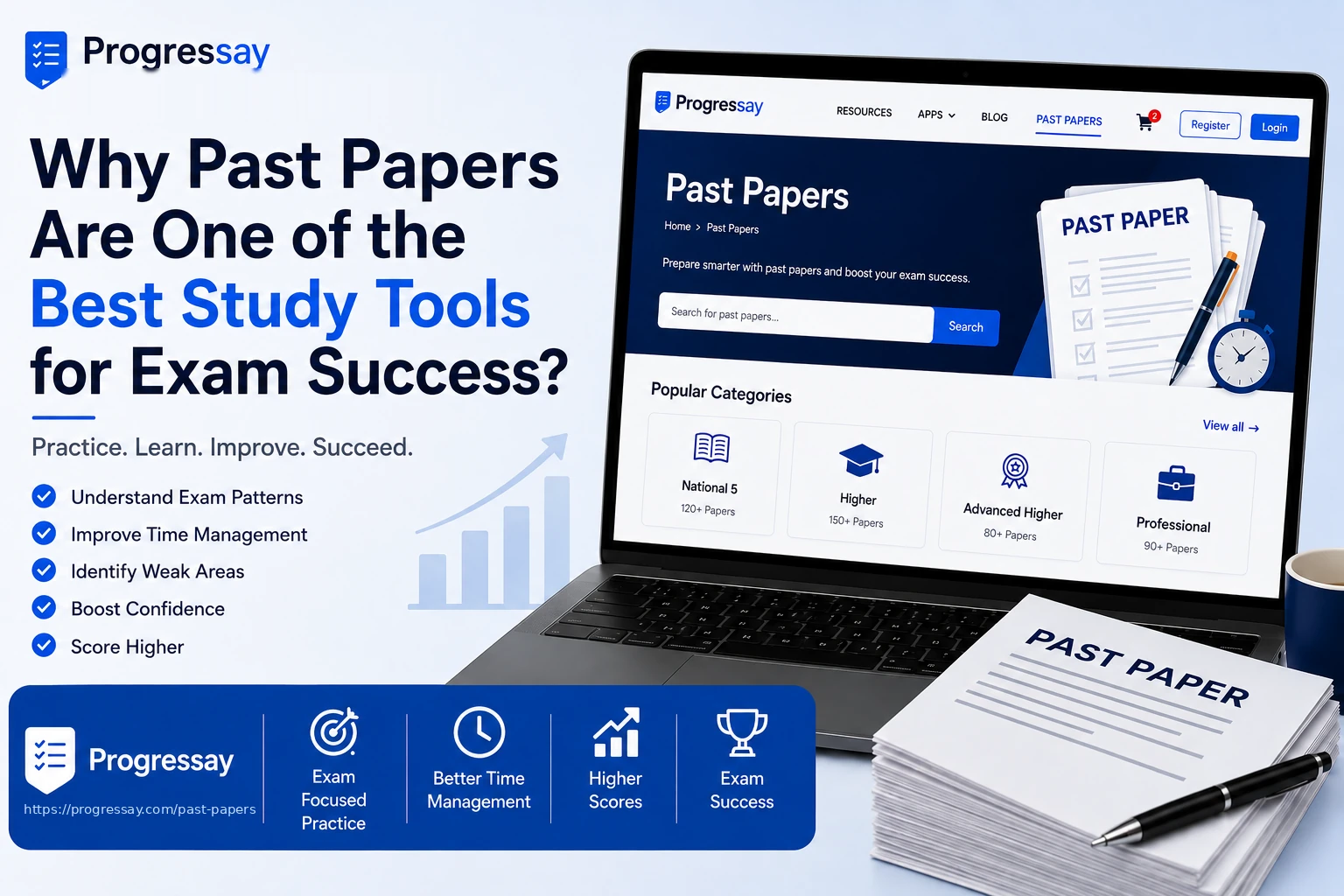
Success in exams isn't just about studying harder—it's about studying smarter. Past papers help you understand exam patterns, improve time management, identify areas that need more attention, and build confidence through regular practice. When combined with your everyday revision, they become one of the most effective ways to prepare for exams.
Instead of saving past papers for the final days before an exam, make them a regular part of your study routine. Review your answers, learn from your mistakes, and track your progress over time. Small, consistent efforts can make a big difference in your results.
Ready to practise? Explore thousands of free GCSE, IGCSE, AS & A Level past papers on Progressay and start revising with confidence.
Frequently Asked Questions (FAQs)
1. Why are past papers important for exam preparation?
Past papers are one of the most effective revision tools because they help students understand the exam format, identify important topics, improve time management, and build confidence before the actual exam. Regular practice with past papers can lead to better exam performance.
2. How do past papers help improve exam results?
Past papers improve exam results by allowing students to practise answering real exam questions, identify knowledge gaps, and become familiar with the marking style. Reviewing mistakes after each paper helps strengthen understanding and improve future performance.
3. How many past papers should I complete before an exam?
There is no fixed number, but completing at least 5–10 past papers for each subject under timed conditions is recommended. The more you practise and review your mistakes, the more confident and prepared you'll be for the exam.
4. When should I start practising past papers?
You should start using past papers after learning the main topics in your syllabus. Begin with untimed practice to understand the questions, then move on to timed exams several weeks before your actual exam.
5. Are past papers enough to prepare for exams?
No. Past papers should be used alongside textbooks, class notes, revision guides, and other study resources. Combining these materials provides a more complete understanding of the subject and improves exam readiness.
6. Should I use the marking scheme when practising past papers?
Yes. Reviewing the official marking scheme helps you understand how examiners award marks, what answers they expect, and how you can improve your responses in future exams.
7. Do exam questions repeat in past papers?
While exact questions may not always repeat, many exams test the same concepts and skills in different ways. Practising past papers helps you recognise common question patterns and prepare for similar topics.
8. How can I use past papers effectively?
For the best results, complete past papers under timed conditions, review every mistake, compare your answers with the marking scheme, and focus your revision on weak topics. Tracking your progress over time can also help improve your performance.
9. Where can I find free GCSE, IGCSE, AS & A Level past papers?
You can find free GCSE, IGCSE, AS & A Level past papers on Progressay. The collection is organised by subject and exam board, making it easier to find the practice papers you need for effective revision.
10. Why should I practise past papers on Progressay?
Progressay provides a well-organised collection of free past papers, helping students practise more efficiently. Whether you're revising for GCSE, IGCSE, AS, or A Level exams, Progressay makes it easy to access quality exam practice resources in one place.