
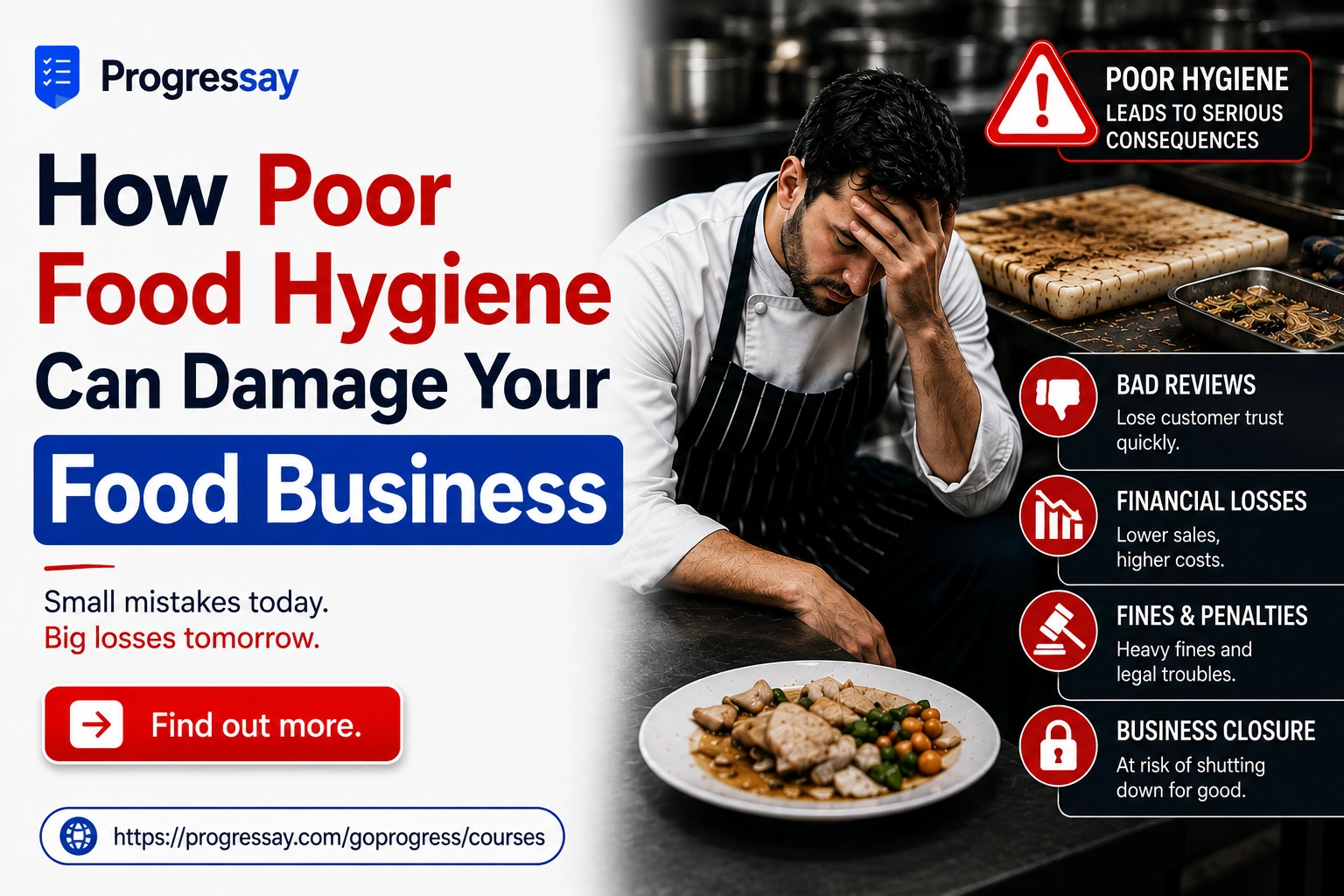
How Poor Food Hygiene Can Damage Your Food Business: Risks, Consequences & Prevention
Poor food hygiene is more than just an operational issue—it can have serious consequences for any food business. Whether you own a restaurant, cafe, takeaway, catering company or food truck, maintaining high food hygiene standards is essential for protecting customers, complying with UK food safety regulations and building a trusted reputation.
A single food safety mistake can result in customer complaints, poor food hygiene ratings, negative online reviews and even legal action. In today's digital world, where customers often check hygiene ratings before deciding where to eat, poor food hygiene can quickly affect sales and long-term business success.
Fortunately, these risks can be reduced through proper food hygiene practices, regular staff training and a strong food safety culture.
At Progressay, we help learners and food professionals build essential food safety knowledge through practical online learning. If you're looking to strengthen your understanding of food hygiene, Explore our 👉 Food Hygiene & Safety – CPD Certified Course to gain valuable skills and a recognised certificate.
In this guide, you'll learn how poor food hygiene affects food businesses, the common causes of food safety failures, and practical steps to improve hygiene standards and protect your business.
What Is Poor Food Hygiene?
Poor food hygiene refers to unsafe food handling, preparation, storage or cleaning practices that increase the risk of food contamination and foodborne illness. It occurs when businesses fail to follow proper hygiene procedures designed to keep food safe for consumption.
Examples of poor food hygiene include:
- Employees not washing their hands properly.
- Cross-contamination between raw and cooked foods.
- Food stored at unsafe temperatures.
- Dirty kitchen equipment and work surfaces.
- Pest infestations.
- Expired food being used.
- Poor personal hygiene among food handlers.
Even small mistakes can create serious health risks for customers and expose a business to legal and financial consequences.
Why Food Hygiene Matters for Every Food Business
Food hygiene is one of the most important responsibilities in the food industry. Customers expect food to be safe, fresh and prepared in a clean environment. Failing to meet these expectations can lead to a loss of trust and lasting damage to your business.
Maintaining good food hygiene helps businesses:
- Protect customers from foodborne illnesses.
- Comply with UK food safety regulations.
- Improve food hygiene ratings.
- Reduce food waste.
- Build customer confidence.
- Strengthen business reputation.
- Increase repeat customers.
Businesses that consistently maintain high hygiene standards often receive better customer reviews and enjoy stronger long-term growth.
How Poor Food Hygiene Can Damage Your Food Business
1. Loss of Customer Trust
Trust is difficult to earn and easy to lose. If customers discover poor hygiene practices or read reports of food safety issues, they may choose another restaurant or café.
Negative experiences spread quickly through online reviews and social media, making reputation recovery much more difficult.
2. Lower Food Hygiene Rating
In the UK, food businesses are inspected by local authorities under the Food Hygiene Rating Scheme (FHRS).
A low hygiene rating can discourage potential customers before they even visit your business. Many people actively search for businesses with higher hygiene scores because they associate them with safer food and better quality.
3. Loss of Revenue
Poor food hygiene often leads directly to lower sales.
Customers who lose confidence may stop visiting, recommend competitors instead or leave negative reviews online. A declining reputation can reduce both new and repeat business.
The financial impact may include:
- Fewer customers
- Lower daily sales
- Lost catering contracts
- Reduced bookings
- Increased operational costs
4. Foodborne Illness Outbreaks
Unsafe food handling can cause harmful bacteria such as Salmonella, E. coli and Listeria to contaminate food.
Foodborne illnesses may result in:
- Customer illness
- Hospitalisation
- Compensation claims
- Business investigations
- Long-term reputational damage
Preventing contamination should always be a top priority.
5. Legal Consequences
Food businesses must comply with UK food safety legislation.
Failure to meet legal requirements may result in:
- Improvement notices
- Fines
- Temporary closure
- Legal prosecution
- Licence issues
Compliance protects both customers and the future of the business.
6. Damage to Your Brand Reputation
One hygiene incident can remain online for years.
Negative reviews, local news coverage and poor hygiene ratings can significantly affect how customers view your business.
Building a positive reputation takes time, but poor hygiene can damage it very quickly.
7. Reduced Staff Morale
A poorly managed kitchen often creates a stressful working environment.
Employees may become frustrated by:
- Poor organisation
- Unsafe working conditions
- Lack of training
- Increased pressure during inspections
Proper hygiene procedures help create a safer and more professional workplace.
Common Causes of Poor Food Hygiene
Many hygiene problems develop because businesses overlook basic food safety practices.
Common causes include:
- Poor hand washing
- Cross-contamination
- Incorrect food storage
- Dirty equipment
- Pest infestations
- Inadequate staff training
- Failure to monitor food temperatures
- Poor cleaning schedules
Identifying these issues early helps prevent larger problems later.
How to Improve Food Hygiene in Your Business
Improving food hygiene requires consistent daily practices.
-
Train Your Staff
Every employee should understand safe food handling procedures from their first day at work.
-
Follow HACCP Principles
Hazard Analysis and Critical Control Points (HACCP) helps businesses identify and control food safety risks before they become problems.
-
Maintain High Cleaning Standards
Create daily, weekly and monthly cleaning schedules for kitchens, equipment and food preparation areas.
-
Monitor Food Temperatures
Regularly check refrigeration, cooking and storage temperatures to ensure food remains safe.
-
Prevent Cross-Contamination
Separate raw and cooked foods and use colour-coded chopping boards and utensils.
-
Carry Out Internal Audits
Regular inspections help identify hygiene issues before official inspections take place.
Why Food Hygiene Training Is Essential
One of the most effective ways to maintain high hygiene standards is through regular staff training.
Proper food hygiene training helps employees understand:
- Personal hygiene
- Safe food handling
- Food storage
- HACCP principles
- Cleaning procedures
- Legal responsibilities
If you're looking to improve your team's food safety knowledge, explore Progressay's Food Hygiene & Safety – CPD Certified online course. It provides practical training that helps food handlers build confidence, understand UK food safety practices and support compliance in the workplace.
👉 Explore the course: https://courses.progressay.com/course/food-hygiene-safety-cpd-certified
Final Thoughts
Poor food hygiene can have far-reaching consequences for any food business. Beyond the immediate health risks, it can reduce customer trust, lower food hygiene ratings, harm your reputation and lead to financial and legal challenges.
The good news is that these risks are largely preventable. By investing in staff training, following HACCP principles, maintaining high cleaning standards and creating a strong food safety culture, businesses can protect both their customers and their future.
Whether you manage a restaurant, café, takeaway or catering company, improving food hygiene is one of the smartest investments you can make.
Is your team fully prepared to maintain the highest food hygiene standards every day?
Frequently Asked Questions (FAQs)
What are the risks of poor food hygiene?
Poor food hygiene can lead to food contamination, customer illness, poor hygiene ratings, financial losses and legal action.
How does poor food hygiene affect customer trust?
Customers are less likely to visit businesses with poor hygiene ratings or negative food safety reviews.
What causes poor food hygiene?
Common causes include poor hand washing, cross-contamination, incorrect food storage, dirty equipment and inadequate staff training.
How can a food business improve its hygiene rating?
Businesses can improve their rating by maintaining clean premises, training staff, following HACCP procedures and complying with food safety regulations.
Why is food hygiene training important?
Training helps staff understand safe food handling, reduce contamination risks and maintain legal compliance.