
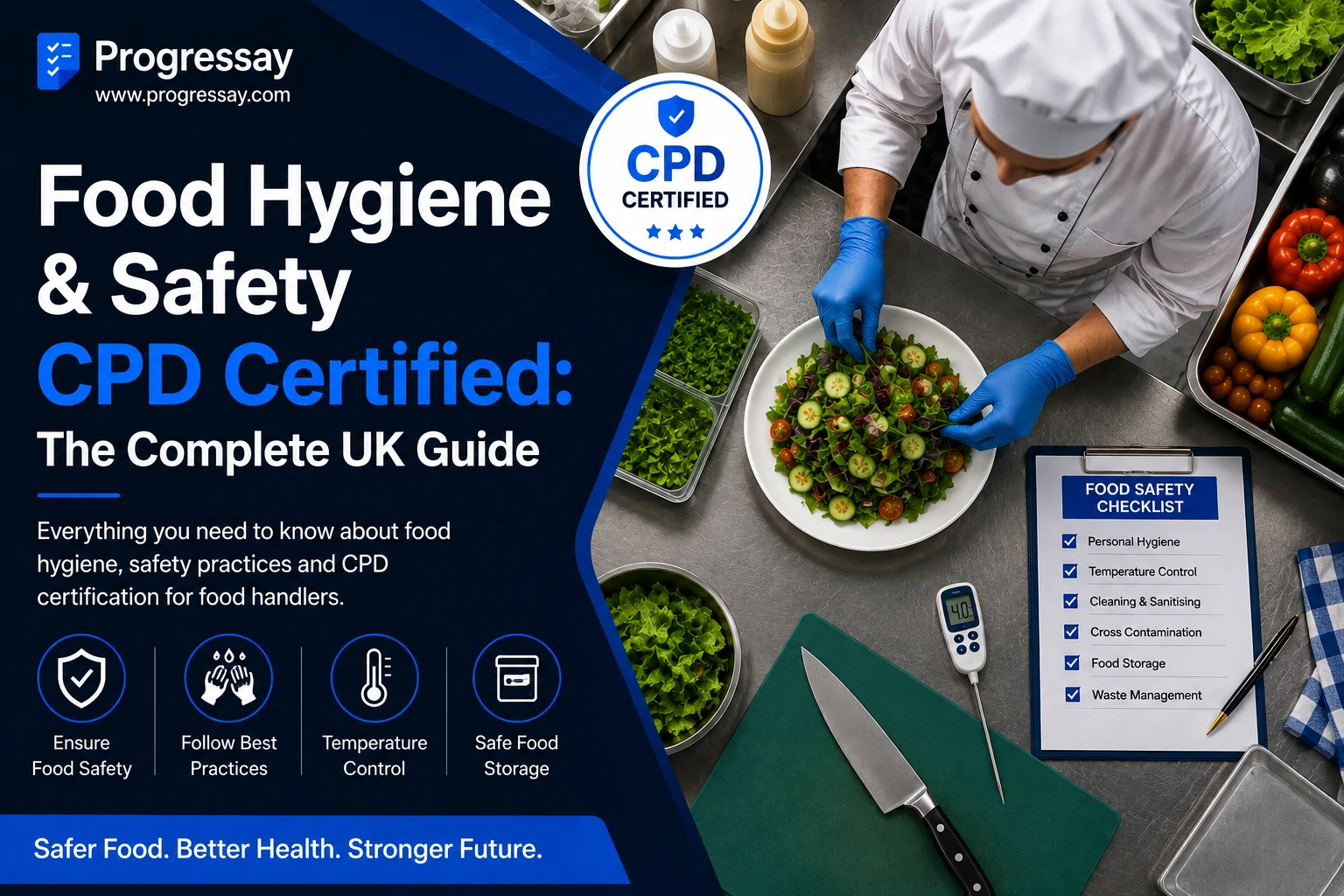
Food Hygiene & Safety CPD Certified: The Complete UK Guide
Food hygiene and safety play a vital role in protecting public health. Whether you work in a restaurant, café, takeaway, care home, school kitchen, supermarket, or food manufacturing business, following proper food hygiene practices helps reduce the risk of foodborne illness and ensures food is safe for consumers.
In the UK, employers must ensure that food handlers receive training appropriate to their role. A CPD Certified Food Hygiene & Safety course is an excellent way to build the knowledge and practical skills needed to handle food safely while supporting ongoing professional development. UK law requires food businesses to ensure staff are supervised and trained appropriately, although it does not mandate a specific named certificate.
If you're looking to improve your knowledge or strengthen your CV, Progressay offers a comprehensive Food Hygiene & Safety – CPD Certified course designed for learners across a range of food-related industries.
Explore the Food Hygiene & Safety – CPD Certified course on Progressay
What Is Food Hygiene & Safety?
Food hygiene and safety refer to the practices used to keep food safe throughout every stage of the food chain—from preparation and cooking to storage, transportation, and serving.
The main objectives are to:
- Prevent food contamination
- Reduce food poisoning risks
- Maintain food quality
- Protect customers
- Meet UK food safety standards
Good food hygiene is essential in every environment where food is prepared or served.
Why Food Hygiene Is Important
Poor food hygiene can lead to serious health risks and damage a business's reputation.
Proper food hygiene helps:
- Prevent foodborne illnesses
- Protect vulnerable consumers
- Improve customer confidence
- Reduce food waste
- Support compliance with UK food safety regulations
- Improve Food Hygiene Rating Scheme outcomes
For food businesses, maintaining high hygiene standards is not just good practice—it's part of running a safe and responsible operation.
What Does CPD Certified Mean?
CPD (Continuing Professional Development) is recognised across many industries as a way of maintaining and improving professional knowledge and skills.
A CPD Certified course demonstrates that the learning has been independently assessed against recognised CPD standards, helping learners document their ongoing development.
Benefits include:
- Demonstrates commitment to professional learning
- Supports career progression
- Enhances employability
- Builds confidence in workplace practices
- Provides recognised evidence of training
Who Needs Food Hygiene Training?
Food hygiene training is suitable for anyone who prepares, handles, stores, serves, or supervises food.
Typical roles include:
- Chefs
- Kitchen Assistants
- Caterers
- Café Staff
- Restaurant Employees
- Bakers
- Food Delivery Businesses
- School Kitchen Staff
- Care Home Workers
- Hospitality Employees
- Food Retail Staff
- Food Manufacturing Workers
Benefits of a Food Hygiene & Safety CPD Certified Course
Completing a CPD Certified course helps learners:
✔ Understand food contamination
✔ Prevent cross-contamination
✔ Improve personal hygiene
✔ Learn safe food storage
✔ Understand temperature control
✔ Recognise food hazards
✔ Apply HACCP principles
✔ Improve workplace confidence
✔ Support career development
Key Food Hygiene Principles

Every food handler should understand the core principles of food safety.
Personal Hygiene
- Wash hands correctly
- Wear clean protective clothing
- Cover cuts and wounds
- Avoid working when ill
Cleaning and Sanitising
Regular cleaning reduces harmful bacteria and helps maintain safe food preparation areas.
Temperature Control
Keeping food at safe temperatures reduces bacterial growth.
Food Storage
Correct storage helps maintain food quality and prevents contamination.
HACCP and Food Safety
HACCP (Hazard Analysis and Critical Control Points) is a preventive food safety management system used to identify and control food safety risks. It is widely recognised as best practice in the food industry.
Examples include:
- Monitoring cooking temperatures
- Preventing cross-contamination
- Safe storage procedures
- Cleaning schedules
- Staff training
Common Food Safety Hazards
Food safety hazards generally fall into four categories:
Biological Hazards
- Bacteria
- Viruses
- Parasites
Chemical Hazards
- Cleaning chemicals
- Pesticides
- Allergens
Physical Hazards
- Glass
- Metal
- Plastic
- Hair
Allergen Hazards
Preventing allergen cross-contact is a critical responsibility for food businesses.
Food Hygiene Best Practices
Good daily habits include:
- Wash hands regularly
- Cook food thoroughly
- Store food safely
- Label food correctly
- Separate raw and cooked foods
- Maintain clean equipment
- Monitor refrigerator temperatures
- Dispose of waste properly
Food Safety Laws and Compliance in the UK
UK food businesses have legal responsibilities to ensure food is safe and that staff receive appropriate food hygiene training. Food hygiene legislation also requires businesses to implement procedures based on HACCP principles where appropriate.
Regular training helps businesses maintain high standards and demonstrate compliance during inspections.
How to Choose the Right Food Hygiene Course
When selecting a course, consider:
- CPD Certification
- Up-to-date UK content
- Flexible online learning
- Practical examples
- Assessment and certificate
- Trusted training provider
Progressay's Food Hygiene & Safety – CPD Certified course is designed to help learners gain practical food safety knowledge through flexible online study.
👉 Start learning today:
https://courses.progressay.com/course/food-hygiene-safety-cpd-certified
Frequently Asked Questions
Is a CPD Certified Food Hygiene course recognised in the UK?
CPD certification demonstrates that a course has been independently assessed for professional development. Employers often value CPD-certified training alongside role-appropriate food hygiene knowledge.
Who should complete Food Hygiene & Safety training?
Anyone who prepares, handles, serves, stores, or supervises food should receive appropriate food hygiene training.
What will I learn in a Food Hygiene & Safety course?
Topics typically include food contamination, personal hygiene, temperature control, HACCP, cleaning, food storage, allergens, and legal responsibilities.
Can I complete Food Hygiene training online?
Yes. Many CPD-certified food hygiene courses are delivered online, allowing learners to study at their own pace.
Why should I choose Progressay?
Progressay offers flexible online learning with a CPD Certified Food Hygiene & Safety course designed to help learners build practical knowledge and confidence.
Final Thoughts
Food hygiene is more than a legal responsibility—it's an essential skill that protects customers, supports businesses, and promotes high standards across the UK food industry. Whether you're starting your career or refreshing your knowledge, investing in professional training can improve both workplace confidence and career opportunities.
If you're ready to develop your food safety knowledge, Progressay's Food Hygiene & Safety – CPD Certified course provides flexible online learning designed to help you understand key food hygiene principles, food safety best practices, and UK compliance requirements.
👉 Enrol today: https://courses.progressay.com/course/food-hygiene-safety-cpd-certified